
Pinball video games have been around for years — I cut my teeth on Space Cadet 3D Pinball, which was pre-loaded on Windows 95. They range from realistic recreations of pinball tables you’ll find at arcades to games that could never exist in real life like 2019’s Demon’s Tilt or older ones like Metroid Prime Pinball for the Nintendo DS or Pokémon Pinball for the Game Boy Color.
I didn’t expect to find a detailed pinball game for the humble and delightful Playdate, but a pair of developers working under the name Amano pulled it off with Devils on the Moon Pinball, which arrived last week. It’s the developer’s third game for the Playdate, and Mario and JP (who make up Amano) pointed directly to Pokemon Pinball as the inspiration for this game. “I think one of my most-played games is Pokemon Pinball,” JP said. “But the idea to make a pinball game came from Mario… he came to me and say ‘JP, I want to make a custom engine for Playdate and we should make a pinball game.’”
I love playing pinball in real life, but owning a full-size table is extremely expensive and takes up a ton of room. But Devils on the Moon completely scratches the itch. The controls are extremely simple: pressing left on the d-pad flips the left fipper, A flips the right flipper, and pressing down on the d-pad launches the ball. Amano also included tilt controls; pressing right or up on the d-pad or the B button shakes the table in a particular direction so you can try and save the ball. Sadly, the crank doesn’t come into play, but I can’t say I have a good idea for how it would be used.
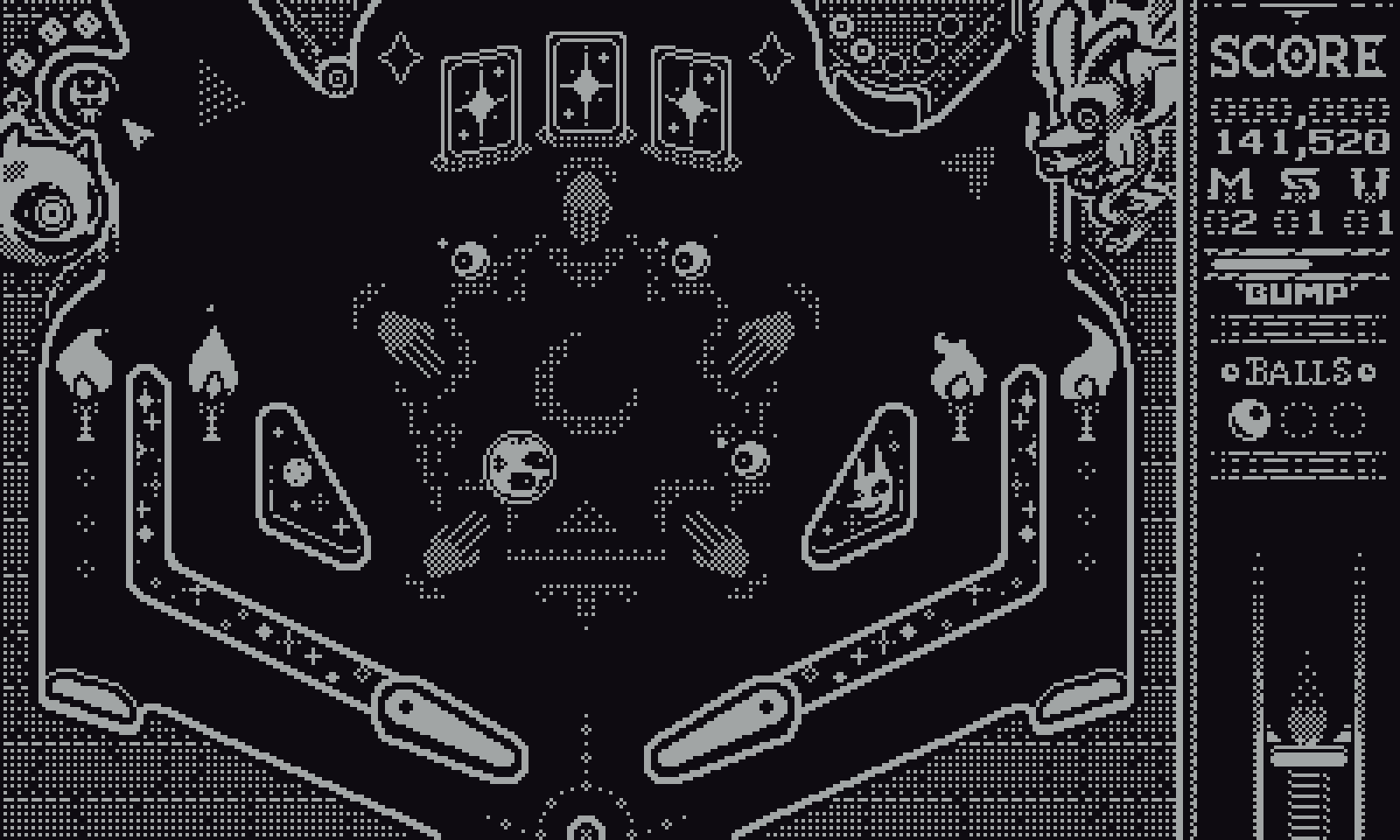
I was impressed with both the physics and table design of Devils on the Moon after playing for just a few minutes. Despite not having analog control, the way the ball reacted when I hit the flippers felt consistent and smooth, and while I was often surprised at some of the bounces it took, it never felt unfair. When I drained a ball, it was almost always something I could have avoided if I knew the game better or had faster reflexes — just like a good, real-life pinball table.
JP and Mario described the game as using “stylized physics” rather than it being fully realistic. “It may not necessarily be accurate to real life,” JP said. “But since the screen is wider than it is tall unlike actual pinball, we needed the ball to feel a little bit floaty and not fall as fast because then it would just zoom straight down the screen.”
The table design feels both grounded in reality while also taking advantage of its virtual nature. There are three vertical “levels,” each with its own set of flippers. The 2D nature of the game means there aren’t any true ramps like you’ll on most pinball tables, but having three separate sections of the game to get used to makes up for that. And provided you complete various modes in the game, you can reach boss battles where you’re tasked with whacking a giant enemy repeatedly to drain away their health bar. Physical pinball tables often have similar encounters, but they have to be worked into the design of the game — in this case, your ball essentially ports to an entirely different space when you battle a boss.
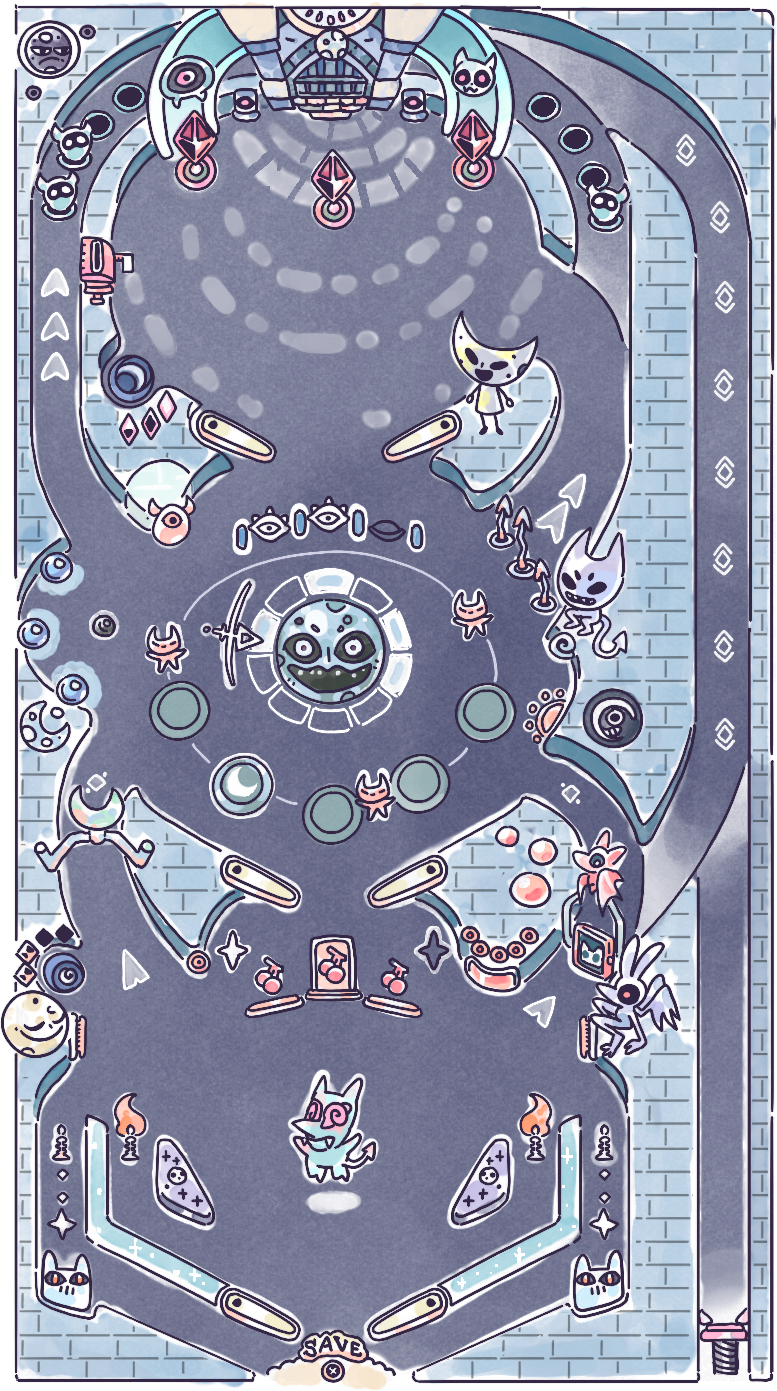
“It’s kind of playing like the old pinball machines where the rules are really simple,” Mario said.”. “You just have a few things to do. In our case, it ended up going beyond our original scope, but it’s still quite simple compared to an actual pinball machine in terms of rules.” He said the design intent was to make the game friendlier to people who might try it out without a lot of pinball experience while still putting enough challenge into it.
The audio and visual presentation is top-notch for a Playdate game, too. Perhaps most crucially for a pinball game, there’s no lag or stuttering. The game also has a distinct visual identity, something that’s always important for pinball to draw you into the world of the playfield as much as possible. The game’s page cheekily promises “ at least (1) songs” and it delivers on that with a solid theme for the main game that serves well as background music that doesn’t get old if you’re playing for a while, and the beeps and boops the table makes as you play feel well-suited to the game. It doesn’t “sound” like a real pinball table — but it isn’t one, so that’s okay.
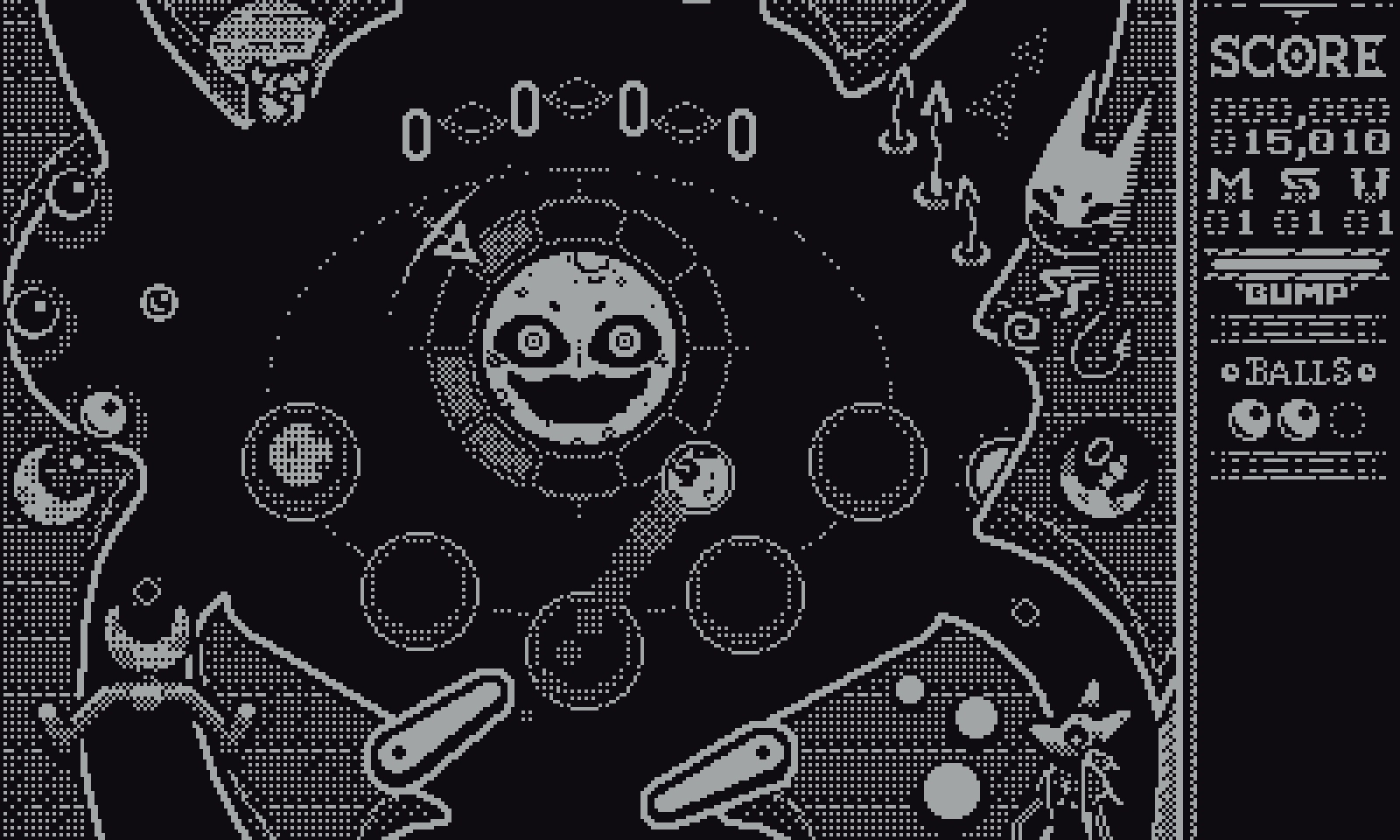
I haven’t played a video pinball game in a long time, but the Playdate feels like an ideal platform for this. I can bring it with me anywhere and play a round or two (provided there’s decent light) or settle in for a longer play session. The game is challenging enough that you’ll need to practice a lot to get the hang of it, but there’s enough variety to the three-tiered table to keep players interested for the long haul. After all, the fun of pinball isn’t necessarily playing a table for the first time — it’s learning it inside out so you can maximize your score. I’m looking forward to getting to that point with Devils on the Moon.
This article originally appeared on Engadget at https://www.engadget.com/gaming/devils-on-the-moon-brings-the-score-chasing-of-pinball-to-the-playdate-130000414.html?src=rss
