Katina Alford

Katina Alford

“Passionate about building connections and sharing creativity while creating engaging content and a vibrant community.”

Meta’s latest creator push comes with $3,000 bonuses for posting on Facebook

Meta’s latest creator push comes with $3,000 bonuses for posting on Facebook

Stop me if you've heard this before: Meta has a new program to lure top creator talent to Facebook and it comes with hefty bonus payments. The company is launching a new initiative aimed at popular creators who already have large followings on TikTok, YouTube or Instagram and offering them bonuses up to $3,000 a month just for posting on Facebook.Meta's goal is to draw more top talent to its Content Monetization program, which pays creators based on views and other engagement metrics across Stories, Reels and posts. The new bonuses will be part of an initiative Meta has dubbed "Creator Fast Track," which is meant to make the onboarding process easier — and more enticing — to Facebook newcomers.Under the new "Fast Track" program, Meta is offering monthly bonuses of $1,000 to creators who have at least 100,000 followers on another platform and $3,000 for those that have a million or more. Creators who join will need to post a minimum number of Reels per month to earn the bonuses, but aren't required to meet engagement targets or post exclusive content to earn. They also aren't limited to video content as Facebook also rewards text and photo posts, as well as Stories. That may sound like a pretty good deal (it is), but it's also a limited one. The fast track bonuses will only last for three months. Creators should think of the bonuses as payment "for the hassle of starting on a new platform," not the central part of the program, Meta's VP of Product for Creators, Yair Livne, tells Engadget. "Our hope is that within a few months 
 the earnings that you see from Facebook Content Monetization will become the more important thing." He also notes that Meta will boost the reach of creators it fast-tracks, which should help them speed up their earning potential. Creators can apply for the new program in Facebook's app.MetaIt's far from the first time Facebook has sought to lure big names with big checks. It promised publishers big payouts when it launched Facebook Watch nearly a decade ago. It once courted game streamers for its (now defunct) Twitch competitor. A year after launching Reels to take on TikTok, it invested $1 billion in a bonus program that offered creators as much as $35,000 a month only to pull the plug in 2023.  Livne acknowledged that it "took us a long time to find our path" to a more sustainable creator program. "We don't have a pool structure so you're not competing with other creators for dollars. It really is based on your performance." There are already signs that the Facebook Content Monetization program, which it introduced in the fall of 2024, is working — at least for some. Meta says it paid Facebook creators nearly $3 billion in 2025, a new high for the social network. Creators have also reported that the new streamlined program is paying off. One political news creator told the newsletter Chaotic Era that they made $250,000 from Facebook in January alone. Publishers told Digiday last year that they expected to make "between six and seven figures" in 2025 thanks to the program. There are numerous recent posts in Reddit's r/passiveincome forum where users report making five figures a month from the program, which is still invitation only. Livne agrees that Facebook's monetization program has been something of a "well kept secret" in the creator community. "We're trying to make it less well kept and less of a secret." Are you in Facebook's Content Monetization Program, Creator Fast Track or another creator program at Meta? You can reach Karissa by email, on X, Bluesky, Threads, or send a message to @karissabe.51 to chat confidentially on Signal.This article originally appeared on Engadget at https://www.engadget.com/social-media/metas-latest-creator-push-comes-with-3000-bonuses-for-posting-on-facebook-160000283.html?src=rss

Tech companies are teaming up to combat scammers

A coalition of Big Tech companies is working on a more comprehensive solution to combat online scams. As first reported by Axios, Google, Microsoft, LinkedIn, Meta, Amazon, OpenAI, Adobe, Levi Strauss & Co, Target, Pinterest and Match Group announced the signing of the Industry Accord Against Online Scams and Fraud. The new agreement is meant to put up a united industry-wide front against online fraud and scams, particularly those from sophisticated criminal networks that use multiple platforms.
According to the Axios report, the measures will include adding fraud detection tools, introducing new user security features, and requiring more robust verification for financial transactions. The agreement will also set up best practices for scam detection, prevention and reporting, while encouraging the sharing of information between companies and law enforcement. On the policy side, the coalition will call on the governments to "declare scam prevention a national priority," according to Axios. While these measures are extensive, the report noted that they're all voluntary since the accord doesn't mention any penalties if the companies don't follow through.
Many of the companies involved in the new accord already have experience in dealing with scams found on their own platforms. Earlier this month, Meta announced several new features across Facebook, Messenger and WhatsApp that would alert users about suspicious friend requests or accounts. Last year, LinkedIn introduced a new verification requirement for company recruiters or executives to address scams targeting job seekers on its platform.
Update, March 18, 2026, 9:40AM: This article has been updated to add additional members of the accord and to include its full name, the Industry Accord Against Online Scams and Fraud. This article originally appeared on Engadget at https://www.engadget.com/cybersecurity/tech-companies-are-teaming-up-to-combat-scammers-144616545.html?src=rss

It’s time for Game Freak to finally give PokĂ©mon some proper voice acting

Ever since making the jump to the Nintendo Switch, there's something that's bugged me about practically every modern Pokémon game, a feeling that has only intensified after spending countless hours in Pokopia. For titles based in big, open worlds and filled with adorable polygonal characters and lovely music, why is nearly every pokémon still saddled with a call that sounds like a dial-up internet connection? As someone who played Pokémon Red and Blue at launch, I'm very aware that the origin of these sounds is tied directly back to those original titles on Game Boy, which was powered by an 8-bit SM83 processor from Sharp. Back then, it was a herculean challenge to fit the entire game into a single 512KB cartridge. So as a way to save space, the voice (or cry as they are more commonly known) of each of the original 151 Pokémon came from just 38 base cries, which then had their pitch or duration modified to create more unique sounds. Naturally, this tradition of lo-fi cries continued throughout Pokémon's run on the Game Boy and Game Boy Advance and onto the Nintendo DS and 3DS. And despite the higher-res graphics we got in subsequent titles, the use of sprite-based icons and other nostalgic touches made those bitcrushed calls sound right at home. However, when the series moved to the Switch and Switch 2 and embraced larger 3D worlds, those cries began to feel disconnected, especially for newer players without years of nostalgia to draw from. The first issue is one of identifiability. They all kind of sound the same, especially in earlier titles like Red and Blue or Gold and Silver, where around one hundred new Pokémon are represented by just 30 base cries. Ideally, a monster's voice would be just as recognizable as its silhouette. Unfortunately, the current lo-fi cries just don't fit the bill. The second problem is that the continued use of the old-school cries feels out of place in the grand scheme of Pokémon. When you watch the Pokémon anime, monsters don't use the same crunchy screams. Same goes for the movies, including big theatrical releases like Detective Pikachu. At this point, pretty much every new piece of Pokémon media except the games (and the TCG for obvious reasons) features proper voice acting, which sort of brings us to the biggest reasons to ditch the audio clips from the Game Boy era: Pokémon that actually say their name is just super fun and easy to understand. Sure, it's a bit of a gimmick, but it works. Plus, it kind of resonates with the philosophy that many vexillologists hold that says flags should be simple enough for a child to draw. Kids can say "Charmander," "Greninja" and even "Alomolola." But there ain't no way they are pronouncing this. For a game that's intended to be played by younger audiences, having the reinforcement of hearing a pokémon say its name while also seeing it written out in text isn't just easier to comprehend, it can also be a learning exercise. Also, just ask yourself, when you think of Squirtle, what do you hear in your head: this or this?  Now, there are several reasons why Game Freak hasn't made this leap already. The first is obviously money. Granted, localization costs only make up a fraction of the budget for a Pokémon game, but it's still a lot of work to translate things for various regions across the world, especially with modern titles available in at least nine different languages. This includes adjusting the names of specific monsters to better suit a specific market. For example, in Japanese, Hitmonchan and Hitmonlee are named Ebiwalar and Sawamular as a tribute to some of the country's most famous boxers. So when you consider the need to get different voice actors across the world to perform all of these variations, things get expensive. Furthermore, there's an argument that creating a canonical voice for a main character like Victor or Gloria from Sword and Shield takes away from players' ability to imagine their own. Pokémon is an RPG after all. However, I don't think that reasoning flies when it comes to each monster's individual cry, even though many of them have been upgraded or refined in recent years. Same goes for the idea that a Pokémon that says its name sounds less natural than whatever this is. At the end of the day, these monster calls are iconic, and the Pokémon devs know this, because they've given proper cries to characters like Pikachu and Eevee in certain situations.Regardless, for a franchise that's one of, if not the most valuable media property on the planet, I really hope that one day we can get proper vocal performances in Pokémon games, even if it costs Game Freak and Nintendo a little extra money. To be clear, I don't hate the old 8-bit cries and I don't think Game Freak needs to delete them entirely. They can simply be an alternate choice for anyone who prefers them over their actual voices. I just feel like after recently celebrating its 30th birthday, it's time for Pokémon to move on and celebrate some of the voice acting that helped make the franchise so popular in the first place.This article originally appeared on Engadget at https://www.engadget.com/gaming/nintendo/its-time-for-game-freak-to-finally-give-pokemon-some-proper-voice-acting-130000851.html?src=rss

BMW’s i3 is reborn as a sporty 440 mile range EV sedan

After letting us drive a prototype around in the snow earlier this month, BMW has fully unveiled its all-new i3 electric vehicle. It's a far cry from the original funky hatch launched way back in 2013, offering more of everything including power, range and space. It also looks like you'd hope a 3-series EV would: a sporty sedan, minus the polarizing grille on the gas-powered M3. 
The i3 uses BMW's Neue Klasse platform and indeed borrows inspiration from the company's Vision Neue Klasse concept unveiled in 2023. With motors on the front and rear in the 50 xDrive configuration, along with the 800-volt electrical system, it delivers a combined 463 HP and 476 lb-ft of torque, just a touch less than BMW's G80 M3. 
BMW
That will make the BMW quick (the automaker didn't say how quick yet), but it will also be efficient. BMW estimates that the i3 will go 440 miles on a charge according to EPA guidelines and offer quick energy replenishment as well via DC charging speeds up to 400kW — up to 30 percent faster than its previous Gen5 tech. The battery pack will also be directly integrated into the chassis to reduce weight and increase torsional rigidity, while allowing bidirectional charging so you'll be able to use it as a battery on wheels to power your home in a blackout. 
Styling-wise, the i3 is much simpler up front with the grille and headlights incorporated as a single unit. A recess down the center of the hood draws your eye to the badge, while giving the EV muscle car allure. The side intakes add to that impression, as do the bulgy fenders, "Le Catellet Blue" metallic paint and optional lighting animations (Relaxed, Excited and Balanced).
Fabian Kirchbauer Photography
On the tech side, the i3 supports BMW's Digital Key Plus so you can open the doors or trunk with a smartphone or smartwatch. The interior, meanwhile, looks as futuristic as I've seen in any recent EV thanks to the 17.9-inch Panoramic Vision display that's angled toward the driver, along with an optional 3D heads-up display. The system features a self-learning voice assistant with Amazon Alexa+ AI and supports customizable themes, colors and background images. It also includes a wireless charging pad for your smartphone or other devices.
Inside, you can choose between multifunction and M Sport seats trimmed in different themes, including imitation leather in Agave Green, Digital White, Castanea or Black, or an M Design World theme in Black Veganza with M Performtex material. Alternatively, you can go for the BMW Individual scheme with real black Merino leather. For controls, BMW is using a hybrid system with physical buttons for the hazard lights and parking brake and "Shy Tech" buttons on the steering wheel that activate only when required. 
BMW will start i3 production in August 2026 and deliveries later in the fall, with pricing set to be revealed around that time. From what we've seen so far it's going to offer outstanding performance and range, but don't expect it to be cheap.
Fabian Kirchbauer Photography
This article originally appeared on Engadget at https://www.engadget.com/transportation/evs/bmws-i3-is-reborn-as-a-sporty-440-mile-range-ev-sedan-124614369.html?src=rss

Arizona attorney general sues Kalshi on illegal gambling charges

Kalshi has been sued by Arizona's attorney general for operating an illegal gambling business in the state and unlawfully ‌allowing people to place bets on elections. "Kalshi may brand itself as a 'prediction ⁠market,' but what it's actually doing is running an illegal gambling operation ​and taking bets on Arizona elections, both of which violate Arizona law," the state's Attorney General Kris Mayes said. The company defines itself as a prediction markets platform, where users make bets on the outcomes of events ranging from sporting matches to political actions. Kalshi has claimed that it operates under the auspices of the Commodity Futures Trading Commission and shouldn't be faced with the state-level charges of running unlicensed gambling. The case follows a similar action against Kalshi filed in Nevada last month. Kalshi also made headlines this year when an employee of popular YouTuber MrBeast was accused of insider trading on the platform. This article originally appeared on Engadget at https://www.engadget.com/big-tech/arizona-attorney-general-sues-kalshi-on-illegal-gambling-charges-172006290.html?src=rss

YouTube and FIFA partner up for the 2026 World Cup

FIFA is turning to streaming platforms to maximize its return on the 2026 World Cup. Two months after announcing a "Preferred Platform" partnership with TikTok, the organization has now struck a similar deal with YouTube.Broadcasting rights are FIFA’s largest revenue stream for the tournament — and media companies pay top dollar for that access. So, deals like this with streaming platforms help sweeten the package for broadcasters looking to boost their reach.What does that look like for those watching from home? FIFA says its media partners will have the option of streaming "a select number of matches in full" on their YouTube channels. They can also live-stream the first 10 minutes of every match, presumably serving as a hook to coax viewers to finish the match on television. In addition, FIFA's media partners will get access to "every angle" of match footage to craft custom content."As the world's attention turns to the action in Canada, Mexico and the United States, this collaboration with YouTube reinforces our ambition to maximise the tournament's impact across the ever-evolving media landscape," FIFA Secretary General Mattias Grafström said. He says the partnership will offer "fans everywhere easy access to an immersive view of the biggest single-sport event in history."The World Cup runs from June 11 to July 19. Matches will take place in 16 cities across Canada, Mexico, and the US.This article originally appeared on Engadget at https://www.engadget.com/entertainment/streaming/youtube-and-fifa-partner-up-for-the-2026-world-cup-170200470.html?src=rss

Fortnite will return to Google’s Play Store globally on March 19

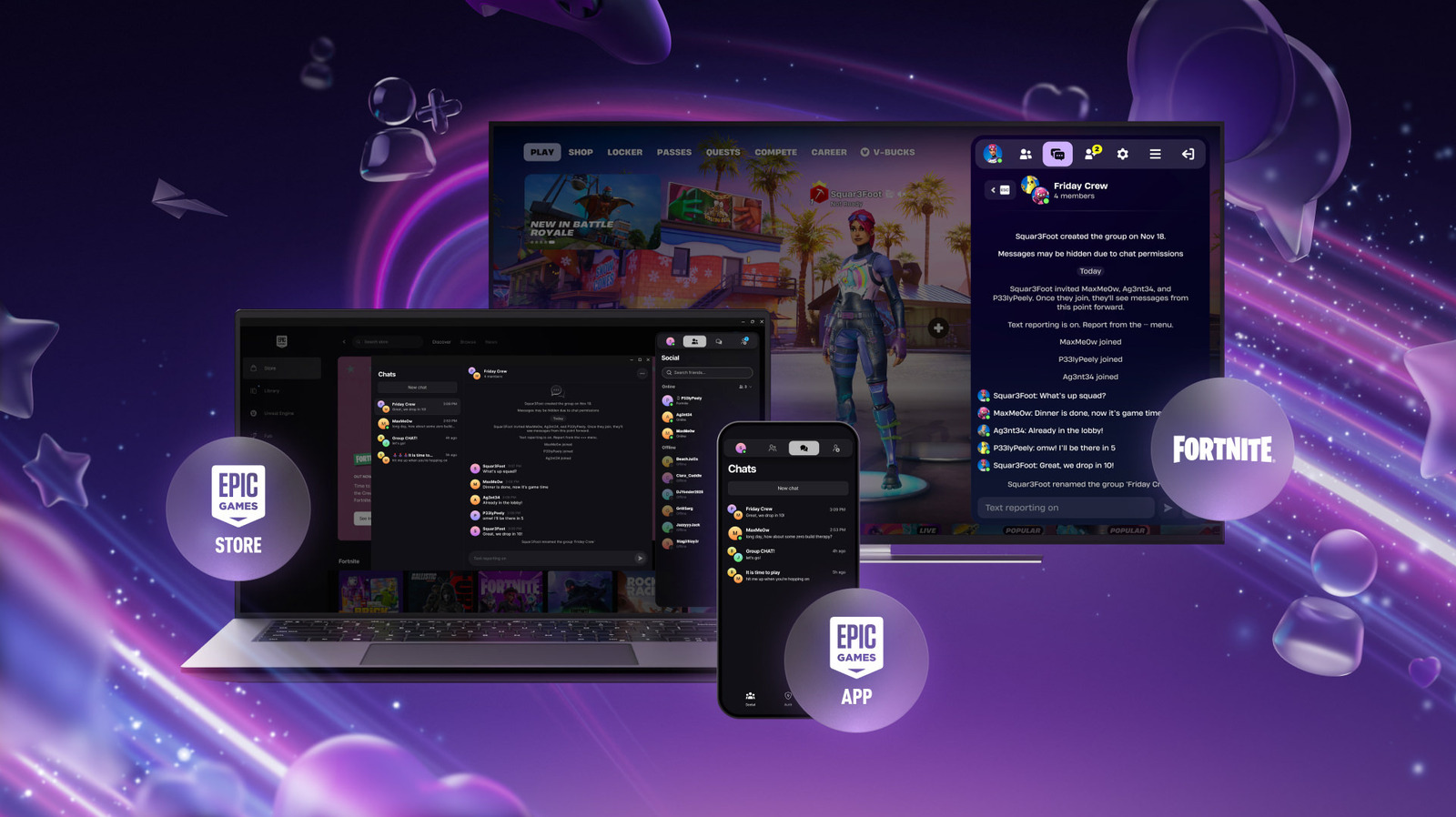
Now that Epic Games and Google have made up — or at least found a way to resolve their long-running disputes — everyone with a compatible Android device can get back to the business of playing Fortnite. The game will return to the Play Store globally on March 19, the same day that the next Fortnite season goes live. It previously dropped back onto the Play Store in the US in December.Google pulled Fortnite from the Play Store back in 2020 after Epic tried to bypass the 30 percent cut of all in-app purchases that the storefront too. Apple did the same thing with the App Store version of Fortnite. Epic swiftly sued Google and Apple, kickstarting years-long legal battles with both companies. No matter where you are, we’ve got you covered. Fortnite is back on Google Play.3.19.26: https://t.co/8M0MjZcvDI pic.twitter.com/QWyR1TEJzX— Fortnite (@Fortnite) March 17, 2026

The dispute with Apple ultimately led to the company having to open up the App Store in certain markets, including the US and EU. Fortnite returned to the App Store in the EU in 2024 and in the US last year.Google and Epic reached a settlement in November. Earlier this month, Google announced that it was lowering the cut it takes of in-app payments from 30 percent to between 10 and 20 percent. At that time, Epic CEO Tim Sweeney (who reportedly agreed not to publicly talk smack about the Play Store until 2032 as part of the settlement) confirmed that Fortnite would return to Google's mobile storefront. Epic recently announced a price increase for the in-game V-Bucks currency. It also confirmed that Fortnite Save the World — the game's original mode — is going free-to-play in April.This article originally appeared on Engadget at https://www.engadget.com/gaming/fortnite-will-return-to-googles-play-store-globally-on-march-19-170200794.html?src=rss

GPT-5.4 mini brings some of the smarts of OpenAI’s latest model to ChatGPT Free and Go users

When OpenAI released GPT-5.4 at the start of March, the company said the new model was designed primarily for professional work like programming and data analysis. Now OpenAI is launching GPT-5.4 mini and nano, and while it is once again highlighting the usefulness of these new systems for tasks like coding, one of the new models is available to Free and Go users. What's more, that model, GPT-5.4 mini, even offers performance that approaches GPT-5.4 in a handful of areas.As a Free or Go user, you can access 5.4 mini by selecting "Thinking" from ChatGPT's plus menu. For paid users, the model is the new fallback for when you've hit your rate limit with 5.4 proper. OpenAI says 5.4 mini offers better performance than GPT-5.0 mini in a few different key areas, including reasoning, multimodal understanding and tool use. That means 5.4 mini is better at parsing non-text inputs such as images and audio, and has a more nuanced understanding of how to do things like search the web. It does all of this while running more than twice as fast as its predecessor. As for GPT-5.4 nano, OpenAI says it's ideal for tasks such as data classification and extraction where speed and cost-efficiency are top of mind. If you're a ChatGPT user, you won't find the new model in the chatbot. Instead, OpenAI is making it only available through its API service. The company envisions developers using more advanced models to delegate tasks to AI agents running GPT-5.4 nano, and that's reflected in the cost of the new model, which OpenAI has priced starting at $0.20 per million input tokens. This article originally appeared on Engadget at https://www.engadget.com/ai/gpt-54-mini-brings-some-of-the-smarts-of-openais-latest-model-to-chatgpt-free-and-go-users-170000585.html?src=rss

Switch 2 software update adds ‘Handheld Mode Boost’ for your old games

We might not have had a proper Nintendo Direct in 2026 yet, but there have been plenty of Switch and Switch 2-related announcements in the last few weeks, including a release date for the Yoshi and the Mysterious Book, a surprise port of Kena: Bridge of Spirits and the final trailer for the imminent The Super Mario Galaxy Movie. But if you’re a Switch 2 owner who prefers to play your library of games in handheld mode, Nintendo’s latest announcement might be the one that interests you most.
The company has released the 22.0.0 system update for its latest console, which brings with it a host of tweaks and improvements, the most notable of which being the introduction of "Handheld Mode Boost." If you’ve played any original Switch games that haven’t received next-gen patches in handheld mode on Switch 2, you might have noticed that they look a bit blurry and unappealing. That’s because they’re still rendering at 720p on the Switch 2’s larger 1080p display, so the image is being stretched to fit a screen it wasn’t designed for.
Handheld Mode Boost doesn’t mean that all unpatched Switch games are now natively running at 1080p on Switch 2, but rather that the console is telling them to run in the original Switch’s docked TV mode — which was able to output at 1080p — on the handheld. Since launch this has seemed like the obvious workaround for Switch games, but it has taken nearly a year for Nintendo to implement it. You should see higher resolution visuals and, in some cases, better performance, as a result.
When running original Switch games in Handheld Boost Mode (enabled via a toggle in the system menu) your Switch 2 will treat the attached Joy-Con 2 controllers as if they were a Pro Controller. This disables features like motion controls and touchscreen functionality, meaning some games won't work on the newer hardware with Handheld Boost Mode turned on. Eurogamer names Super Mario Maker 2 and The Legend of Zelda: Skyward Sword HD as two examples of games that aren't compatible at the moment. 
There are a number of other updates in version 22.0.0, including a new animation for loading a virtual game card, new GameChat features and more customization options in flight mode. The full list of patch notes can be found here.This article originally appeared on Engadget at https://www.engadget.com/gaming/nintendo/switch-2-software-update-adds-handheld-mode-boost-for-your-old-games-165451808.html?src=rss

Marshall adds a junior-sized party speaker to its lineup

Marshall adds a junior-sized party speaker to its lineup

Marshall is launching a smaller companion for its highly rated Bromley 750 party speaker. The new Bromley 450 retains the larger model’s guitar-amp motif but comes in a petite, less expensive package.The Bromley 450 carries over its larger sibling’s 360-degree audio trickery. Like equivalents from other companies, Marshall’s “True Stereophonic 360-degree sound” fools your brain into perceiving more directionality than its form factor allows. Lighting effects (“inspired by ‘70s stage shows”) also carry over from the larger model. However, this new speaker lacks the “sound character” control found in the Bromley 750.Marshall says you can expect over 40 hours of playtime. If your party somehow goes on longer than that, you can swap out its battery on the fly (using the same one found in the Bromley 750). Or, you know, just plug it into a power outlet. And if your event turns into a performance, you’re covered with mic and instrument inputs.The Bromley 750 (left) and Bromley 450MarshallThe Bromley 450 measures 360 x 261 x 492mm, making it about 25 percent shorter than its big brother. At just under 27 lbs, it only weighs about half as much. That helps to explain Marshall’s decision not to include wheels on this model. (But don’t worry, it still has a handle.) The speaker has an IP55 rating for dust and water resistance.The Marshall Bromley 450 may be less expensive than its larger counterpart, but it still costs a pretty penny. It’ll set you back $800 when it goes on sale on March 31. You can order it on Marshall’s website and from select retail partners (including Best Buy, Sweetwater and Crutchfield).This article originally appeared on Engadget at https://www.engadget.com/audio/speakers/marshall-adds-a-junior-sized-party-speaker-to-its-lineup-120000871.html?src=rss

✹ Join the Estate for Exclusive Access Protected by reCAPTCHA This site uses cookies for memberships, security, and site functionality Privacy Policy
Join Now
Estate Status: Offline ‱ Some live content may not update