Category Featured Videos

Featured video content from MissMacknOG including modeling, music, and behind-the-scenes moments from my creative platform

Meta will “substantially reduce” describing Instagram teen accounts as PG-13

Meta has agreed to "substantially reduceā€ its use of the PG-13 ratings system in relation to its Teen Accounts on Instagram starting April 15.
Last year, the Motion Picture Association objected to Meta directly referencing its movie content rating, which cautions parents against letting their pre-teens engage with certain media. In a cease-and-desist letter seen by The Wall Street JournalĀ at the time, the MPA said that Meta claiming its teen accounts were comparable to PG-13 ratings was "literally false and highly misleading."
The MPA argued that its guidelines for the established movie-ratings system and Meta’s own explanation of the revamped accounts for minors did not align, and that drawing a link could have a detrimental effect on the MPA’s public image by association. It also said that Meta’s system seemingly relies heavily on AI to determine what younger users see on the social media platform.
When introducing the changes in 2025, Meta said that the risk of seeing "suggestive content" or hearing certain language in a movie rated 13+ was a good way of framing something similar happening on an Instagram teen account. It added that it was doing all it could to keep such instances to a minimum.Ā 
Meta has now updated that initial blog post about the changes after coming to an agreement with the MPA, adding a lengthy disclaimer that reads, in part, "there are lots of differences between social media and movies. We didn’t work with the MPA when updating our content settings, they’re not rating any content on Instagram, and they’re not endorsing or approving our content settings in any way."
Meta goes on to explain that it drew "inspiration" from the MPA guidance given its familiarity with parents, as well as feedback it had received from parents, and will continue to do so. The difference is that it won’t make the connection so explicitly in its communications going forward.
"Today’s agreement clearly distinguishes the MPA’s film ratings from Instagram’s Teen Account content moderation tools," said Charles Rivkin, Chairman and CEO of the MPA. "While we welcome efforts to protect kids from content that may not be appropriate for them, this agreement helps ensure that parents do not conflate the two systems – which operate in very different contexts. The MPA is proud of the trust we have built with parents for nearly sixty years with our film rating system, and we will continue to do everything we can to protect that trust."This article originally appeared on Engadget at https://www.engadget.com/social-media/meta-will-substantially-reduce-describing-instagram-teen-accounts-as-pg-13-175912683.html?src=rss

The Super Mario Bros. cartoon is back, but looks really weird and AI might be to blame

Adults of a certain age will no doubt remember The Super Mario Bros. Super Show, a cartoon from 1989 that starred our favorite sibling plumbers decades before they would take over multiplexes with an animated film franchise. The broadcast channel MeTV Toons has begun airing old episodes of the show, likely to trade on the buzz emanating from the pending theatrical release of The Super Mario Galaxy Movie. There's just one problem. The episodes seem to have been sloppified by an AI upscaling algorithm, according to a report by Kotaku.
The Super Mario Super Show has started airing on MEtv using some kind of AI upscaling ,and the results are as good as you'd expect pic.twitter.com/WrdFbOe2iW— Super Mario Wiki (@SMWikiOfficial) March 31, 2026

The original series wasn't exactly a visual delight. It was a cash grab cartoon from the 1980s. However, it looks even worse now. MeTV seems to have run the footage through a bargain bin AI upscaler and the results are, in a word, weird.
Everything looks smoothed over in an off-putting way, with some characters looking markedly different from the original footage. Many of the episodes are available on YouTube, so it's easy to do your own comparisons.
The upscaler also seems to have changed the title card to "The Suele Mario Bros. Super Show." These AI tools have never been great with visual representations of written text, but you'd think someone at the station would have given things a look over. Engadget has reached out to MeTV to ask what happened and we'll update this post when we find out.

For the uninitiated, The Super Mario Bros. Super Show ran for just a single season. But this was 1989, so a full 65 episodes aired throughout the year. Seasons didn't mess around back then. It was famous for its live-action segments that starred professional wrestler "Captain" Lou Albano as Mario. It also turned into a Legend of Zelda cartoon every Friday. There's where the famous "well, excuse me princess" meme comes from.This article originally appeared on Engadget at https://www.engadget.com/entertainment/tv-movies/the-super-mario-bros-cartoon-is-back-but-looks-really-weird-thanks-to-ai-171536332.html?src=rss

DoorDash partners with Rivian spinoff Also for autonomous delivery vehicles

DoorDash partners with Rivian spinoff Also for autonomous delivery vehicles

DoorDash's autonomous delivery plans will get an assist from the Rivian spinoff Also. On Tuesday, the companies announced a strategic partnership in which the delivery company will invest in Also. They intend to "develop and accelerate deployment of autonomous delivery at scale."The companies didn't specify which micromobility vehicles will be used. Also, which Rivian spun off as a separate company in 2025, is currently focused on models that combine pedals and motorized assist.Also's first consumer product is the $3,500 TM-B e-bike with a virtual drivetrain. Seemingly more tailored to DoorDash's needs is the TM-Q. This four-wheeled EV is designed to haul cargo while still fitting in bike lanes. (Have fun with that, cyclists!) The larger (commercial) version, pictured below, looks like it could haul quite a few food orders at once.The TM-Q with its most robust modular storage cabin (left) and without any attachments (right)AlsoIn a statement, Also co-founder and president Chris Yu said the partnership will deploy autonomous vehicles in "areas not yet fully solved for." These include "the intersection of roadways, bike lanes, and road adjacent spaces." In October, Amazon agreed to buy thousands of TM-Q vehicles for last-mile deliveries.As part of the deal, DoorDash co-founder Stanley Tang will join Also as a board observer. TechCrunch reports that the partnership boosts Also's valuation to above $1 billion.This article originally appeared on Engadget at https://www.engadget.com/transportation/evs/doordash-partners-with-rivian-spinoff-also-for-autonomous-delivery-vehicles-163240124.html?src=rss

Rec Room, a Roblox-style VR game, is shutting down

The Roblox-like VR title Rec Room is shutting down after operating for a decade. The free-to-play social game is closing its doors because the developers "never quite figured out" how to make it profitable, despite attracting 150 million players.
"We spent a long time trying to find a way to make the numbers work," the team wrote in a blog post. "But with the recent shift in the VR market, along with broader headwinds in gaming, the path to profitability has gotten tough enough that we’ve made the difficult decision to shut things down."

The shut down officially happens on June 1, but the platform is already making serious changes. Starting today, users will no longer be able to make friends, create new accounts or subscribe to the premium service. However, many features locked behind that subscription paywall will be free from now until June.
The devs are also allowing users to download some of the assets connected to rooms they created. This could, in theory, let them port their creations to other platforms in the future. Snapchat owner Snap has already bought up a bunch of Rec Room's assets and some employees will join the social media company, according to a report by GeekWire.

Rec Room first appeared all the way back in 2016, years before the standalone Meta Quest entered the VR scene. It was a massive hit on the PSVR platform before being ported to other hardware. There's even a traditional version of the game available for non-VR platforms. Just like Roblox, it lets folks design their own spaces to hang out in.
VR is in a tough spot right now. Meta was an industry leader, but the company has been laying off hundreds of people from its Reality Labs division. This is the team that makes VR/AR hardware and software. It's been reported that, instead, the company has been funneling more money into ongoing AI efforts. Sony's PSVR2 was also not a gigantic hit.This article originally appeared on Engadget at https://www.engadget.com/ar-vr/rec-room-a-roblox-style-vr-game-is-shutting-down-154350384.html?src=rss

Deus Ex game studio Eidos Montreal cuts 124 jobs

Another day, another announcement of game industry job cuts. The latest restructuring is happening at Eidos Montreal, which stated that 124 people are being laid off. As with so many similar cuts, the studio's LinkedIn post credited the downsizing to "a result of changing project needs and impacts across production and support teams." The company is also parting ways with its studio head, David Anfossi.Ā Eidos Montreal has worked on titles within the Deus Ex and Tomb Raider franchises, as well as Marvel's Guardians of the Galaxy and Marvel's Avengers games. It is one of the many companies owned by Embracer Group, which snapped up a bunch of studios but has been stuck in a downsizing in a loop following an expensive restructuring of its own gaming empire during 2023 and 2024. That activity reportedly included axing a planned new Deus Ex game that Eidos Montreal was working on.The post from Eidos Montreal didn't specify what projects it is currently active on, although it has said it is involved with the upcoming Grounded 2 from Obsidian Entertainment and the reimagined Fable from Playground Games.This article originally appeared on Engadget at https://www.engadget.com/gaming/deus-ex-game-studio-eidos-montreal-cuts-124-jobs-205057796.html?src=rss

Meta is testing an Instagram Plus subscription service with exclusive features

Meta is testing an Instagram Plus subscription service with exclusive features

Meta is testing a new subscription service for Instagram that offers users "exclusive" features like the ability to post Stories for longer than 24 hours. Screenshots promoting "Instagram Plus" have been spotted by users in the Philippines and Mexico in recent days.Ā According to screenshots shared by social media consultant Matt Navarra, a subscription to Instagram Plus comes with a number of Story-focused features not otherwise available to Instagram users. This includes the ability to create multiple "audiences" for Stories posts, see info about who has rewatched your Story, search the list of people who have viewed your Story, preview Stories posts, extend Stories longer than 24 hours and createĀ  "spotlight" Stories. It also mentions something called ā€œsuper heartsā€ for reacting to Stories.A spokesperson for Meta confirmed the test to Engadget, saying that Instagram Plus is currently available in ā€œa few countries,ā€ but didn’t say which. A dedicated help page on Meta's website says that this feature is not available to everyone right now.ā€Ā  The spokesperson confirmed the feature list shown below, and added that ā€œpreviewā€ would allow people to see some of another user’s Story without ā€œshowing up as a viewerā€ and that Stories posts could be extended for an additional 24 hours. ā€œOur hope from these tests is to understand what’s most valuable to people in a premium feature set,ā€ the spokesperson said.A list of features that come with Instagram Plus subscriptions.ThreadsIt seems that early versions of the service are priced fairly cheaply, with the prices in the Philippines landing at 65 PHP (about $1.07 in USD) a month and in Mexico at $39 MXN (about $2.15 in USD) a month. Meta is also offering prospective users a free one-month trial of the service. The idea seems to be closely modeled after Snapchat+, which also offers bonus features to the app's power users. Launched in 2022, the service has racked up more millions of subscribers and has become a significant driver of non-advertising revenue for the company. Now, Meta is looking to boost its subscription revenue too.Ā The company said earlier this year it would test new types of subscriptions, including those focused on AI features. Elsewhere, Meta has also been pushing its Meta Verified subscriptions more aggressively. Over the last several weeks, I've repeatedly seen promotions for discounted Meta Verified plans with an initial one-month trial starting at $1 (the cheapest Meta Verified plans typically start at $14.99/month). The company has also recently tested link-sharing features in Instagram captions for subscribers and limits on link-sharing on Facebook for non-subscribers.Ā This article originally appeared on Engadget at https://www.engadget.com/social-media/meta-is-testing-an-instagram-plus-subscription-service-with-exclusive-features-181215180.html?src=rss

OkCupid settles FTC case on alleged misuse of its users’ personal data

Match Group and its subsidiary OkCupid has finally settled a lawsuit with the Federal Trade Commission that dates back to its alleged sharing of user data back in 2014. According to the lawsuit, the FTC accused OkCupid of inappropriately sharing personal user data that includes photos and location info with a third party company, Clarifai, which offers AI-powered software for uses like facial recognition and content moderation.
According to the FTC, OkCupid's privacy policy at the time noted that the company wouldn't share a user's personal information with others, except for some cases including "service providers, business partners, other entities within its family of businesses." However, the lawsuit accused OkCupid of sharing three million photos of its users to Clarifai, which the FTC claims is a "unrelated third party" that didn't fall under the allowed entities. On top of that, the lawsuit alleged that OkCupid didn't inform its users of this data sharing, nor give them a chance to opt out.
"While we do not admit any wrongdoing, we have settled this matter with the FTC with no monetary penalty to resolve an issue from 2014 and move forward," an OkCupid spokesperson told Engadget, adding that the allegations don't reflect how OkCupid operates today. "Over the years, we have further strengthened our privacy practices and data governance to ensure we meet the expectations of our users."
Moving forward, the settlement would "permanently prohibit" Match Group, which owns OkCupid, and Humor Rainbow, which operates OkCupid, from misrepresenting what kind of personal information it collects, the purpose for collecting the data and any consumer choices to prevent data collection. Even after the 2014 incident, OkCupid was found with security flaws that could've exposed user account info but, which were quickly patched in 2020.This article originally appeared on Engadget at https://www.engadget.com/cybersecurity/okcupid-settles-ftc-case-on-alleged-misuse-of-its-users-personal-data-175159228.html?src=rss

50 years of Apple pushing tech forward, for better or worse

Over the last 50 years, Apple reimagined personal computers, catalyzed the era of the smartphone, enlarged an iPhone and called it the iPad and garnered a strong position in wearable tech through its Watch series and its AirPods. It also popularized software and services like its App Store, FaceTime, iCloud, iMessages and many more. For a lot of us, the first time we pinched-to-zoom on a photo was likely on an iPhone.
However, Apple gives and it takes away. Things have had to change, be removed and consumers have to move on to whatever's new. For better or worse, the weight of Apple's influence has led to entire product categories following suit. Or, more typically, there's resistance, complaining and then… following suit. With the benefit of hindsight, most of these cases are examples of Apple seeing where technology was going and getting ahead of a transition that would have been inevitable. Often, these transitions have caused short-term pain for some, but time has proven Apple (mostly) correct about dropping older tech.
As Sir Arthur Quiller-Couch once said: murder your darlings. Here are some of the darlings we’ve lost over the years.

The death of the disk drive (1998)

This is a two-parter. The iMac G3 marked Steve Jobs' return. The colorful all-in-one Mac was a new start in many ways. In 1998, Apple ditched the standard ports and myriad cable types of personal computers, going all in on USB and a little-known thing called the internet. (In fact, that’s what the ā€˜i’ in iMac stands for.)
In doing so, it also ditched the 3.5-inch floppy disk drive — although it did have a read-only optical disk drive. Even with sluggish internet and USB transfer speeds at the time, the convenience was plain to see and it led to a decade of thumb drives of ever-increasing storage limits. High-capacity alternatives to the floppy disk, like the Zip disk and even Minidisc, attempted to bridge the gap, but never gained the widespread traction and adoption of the original disk drive. But flash drives and, later, internet-based file storage quickly made them obsolete anyway. Apple was just a little early with its dismissal.

Portable music players (2007)

Despite Apple’s iPod being the de facto music player at the time, it was supplanted by the company’s own biggest hit: the iPhone. At its peak, the iPod made Apple the zeitgeisty tech company it is today. It dominated the MP3 player market, and by 2006, iPods were responsible for 40 percent of the company’s revenue. And that was before the era of Apple including a free U2 album with every iTunes account.
When the iPhone launched in June 2007, it was swiftly followed by the iPod Touch in September. This was the iPhone without the phone part — indicating how the company saw the future of music listening. You didn’t need an iPod if you already had an iPhone in your pocket. It’s the best example of Apple cannibalizing a product that defined a decade with something far more impressive and, eventually, more successful.
It was a slow death. Ignoring the countless MP3-playing rivals, (RIP Zune), Apple dropped the classic iPod in 2014. It soon did the same to the tiny iPod nano and iPod shuffle in 2017. Finally, the company discontinued the iPod Touch in May 2022.

The physical smartphone keyboard (2007 plus change)
Unsplash / Thai Nguyen
When the iPhone’s capacitive screen and touch keyboard landed, there was a learning curve. Moving from physical keys (whether it was a 9-key alphanumeric version or the BlackBerry’s QWERTY experience) to a touch screen, especially on the tiny 3.5-inch panel of the first iPhone, wasn’t easy.
But it was the future. Physical keyboards took up physical space on devices — especially as those screens grew and grew. The adoption of touch keyboards sped up, thanks to third-party keyboard apps on Android, like Swype, SwiftKey and many others, introducing different input methods, smarter predictive text, typing algorithms and even touch heatmaps. Software keyboards were intrinsically more versatile, supporting multiple languages, infinite key arrangements and eventually emoji galleries. A colon-ellipsis smiley soon didn’t hit the same.

The death of the disk drive, part 2 (2008)

The MacBook Air, introduced by Steve Jobs in 2008, was famously pulled from a manila envelope to demonstrate its ultraportable design. To achieve that slimness, it had to ditch the internal optical drive entirely, making it the first MacBook without one. That move kickstarted an era of ultraportable laptops.
It was a major break from what laptop users were used to, and Apple tried to offer people some options. Apple introduced "Remote Disc," a feature which allowed the Air to wirelessly use the optical drive of a nearby Mac or PC, and offered an external USB SuperDrive as an optional accessory. (I've used mine exactly once since I bought it in 2013.)
While it was considered underpowered compared to Windows competitors, the original MacBook Air set a new design standard for the industry. It positioned Apple’s Macs for a future of App Store software installations, faster internet connectivity, and the rise of streaming media, cloud storage, and the rest. Apple’s MacBook Pro and MacBooks eventually followed suit, ditching optical drives in 2012.

Adobe Flash (2010)
Apple
In the early days of the iPhone, Apple famously refused to support Adobe Flash. This was in the early 2000s, too, when much of the web was built with Flash for animations and video support. The iPhone and iPad notably lacked support, creating a fractured browsing experience for years.
In April 2010, just as the first iPad arrived, Steve Jobs published his "Thoughts on Flash" open letter, criticizing its poor security and a lack of touch-friendliness. Many Flash games and interfaces interacted with the mouse cursor's precise position, something that was invisible on the touchscreen iPhone.
It was also a calculated move. By denying Adobe access to the rapidly growing iOS user base, Apple forced developers to choose between sticking with the aging Flash or embracing open standards like HTML5. Also, by making Flash-based games and tools incompatible, it nudged those developers (and iPhone users) toward the App Store for those very games and tools (and more). There, Apple could curate and monetize those creations.
It was a slow death: Adobe finally discontinued Flash in 2020.

The headphone jack (2016)

In a move described by Apple marketing executive Phil Schiller as "courage,ā€ nixing the headphone socket ended up becoming the biggest headline to come from the iPhone 7 launch in 2016. Every flagship iPhone since has lacked the jack, with the most recent iPhone to include it being the original iPhone SE.
To make the change more palatable, Apple bundled a Lightning-to-3.5mm adapter (expect more dongle chat later) with the iPhone 7, 8 and X. In-box headphones also swapped from the typical jack to Lightning. Naturally, this meant you couldn’t charge the phone while you listened to music, unless you already had a pair of wireless headphones.
Of course, this move was ultimately instrumental in making true wireless earbuds ubiquitous. While Apple wasn’t remotely the first company to introduce wireless earbuds (and then headphones), the removal of the headphone jack undoubtedly sped up adoption. Pour one out for the Bragi Dash, the Jabras, the Jaybirds of this world.
Conveniently, alongside the aforementioned iPhone 7, Apple announced the AirPods. Features like one-tap setup and automatic pairing brought the convenience people expected of Apple and put it into a tiny white case.
Despite early resistance and "bragging" from rivals who clung onto the headphone jack, at this point, the socket is mostly confined to cheaper smartphones or phones aimed at audiophiles (hi, Sony) or mobile gamers (ASUS ROG).
Eventually, the iPad Pro also lost its headphone jack, and the rest of the company's tablets followed. The only non-Mac device to keep the jack? The iPod Touch, which had one until its discontinuation in 2022.
Bespoke ports (2016)
Engadget
2016 was the year of donglegate. Apple’s MacBook Pro redesign that year was another drastic shift in the laptop's history. Chasing ever-thinner profiles and less port fuss, Apple stripped away nearly every legacy connector that professionals relied on. This was particularly jarring after the previous-generation MacBook Pro (2015) was often cited as the peak of utility, with a MagSafe charging port, two Thunderbolt 2 ports, two USB-A ports, not to mention a full-size HDMI port and an SD card slot.
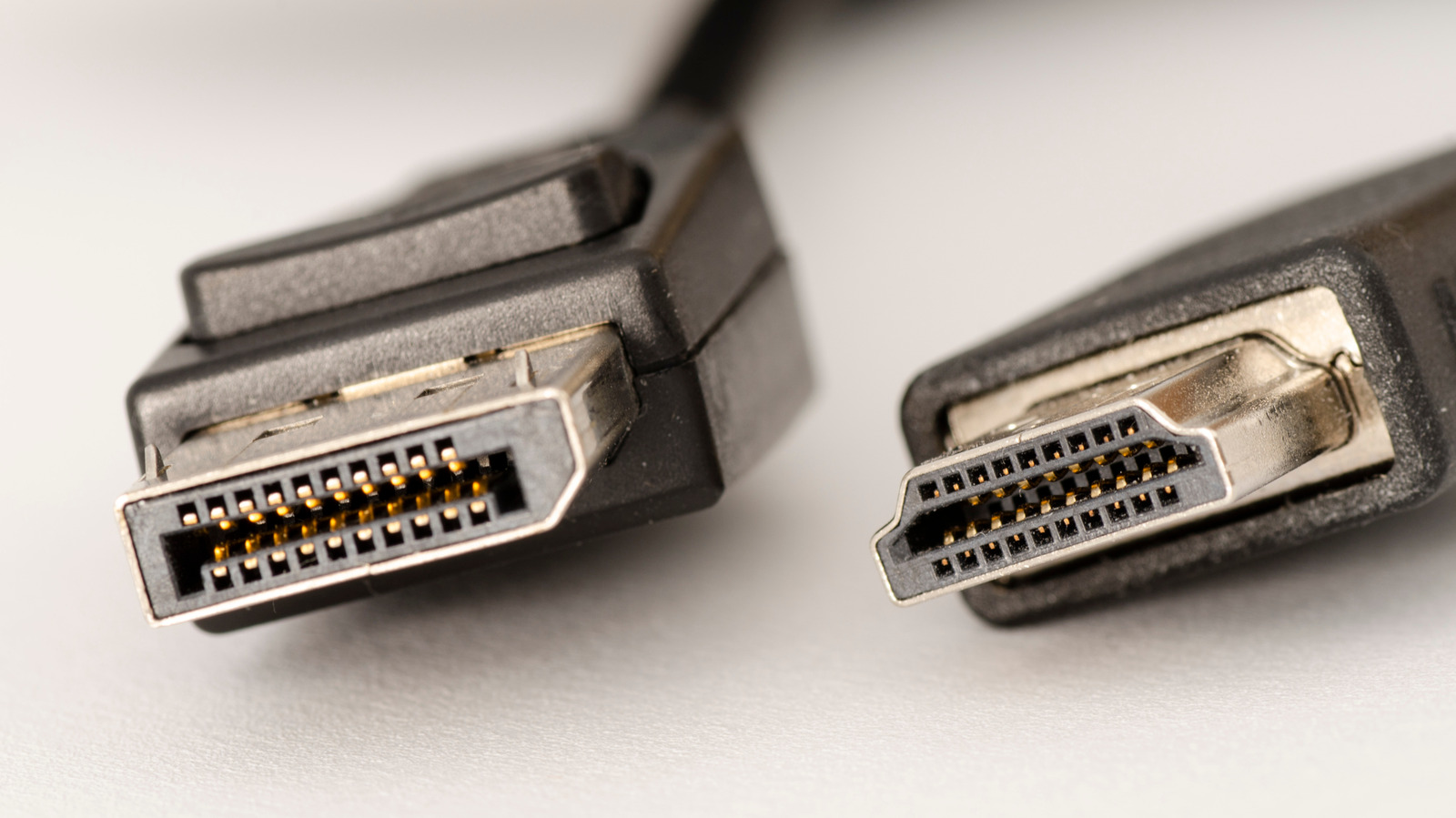
Those were replaced with four (or on the cheapest 13-inch MBP only two!) Thunderbolt 3 USB-C ports and a headphone jack. For power users (like some Engadget editors), it demanded dongles (possibly multiple ones) in order to connect your USB-A thumb drive, wired internet, SD cards, external screens and well, at that point, pretty much everything. Many were particularly furious with the loss of the MagSafe charging connector. Of course, this also meant that one of those USB-C ports would be used primarily to charge the MBP. This sped up the availability of USB-C peripherals and accessories — perhaps because everyone was sick of carrying around so many dongles and hubs — but we still have USB-A devices. HDMI is everywhere. I still have SD Cards.
Eventually, Apple course-corrected itself. The 2021 MacBook Pro redesign reintroduced the SD card reader and HDMI port, and even MagSafe returned, freeing up a USB-C port.This article originally appeared on Engadget at https://www.engadget.com/big-tech/50-years-of-apple-pushing-tech-forward-for-better-or-worse-170025862.html?src=rss

Uber to acquire Berlin-based chauffeur hailing app to ramp up its luxury travel efforts

Uber has acquired Blacklane, a Berlin-based startup that offers chauffeur services and bookings through its app, with plans to expand further into the luxury travel industry. Blacklane, founded in 2011, acts as a liaison between independent local chauffeur services and travelers looking for a more premium ride. According to Uber, the deal is subject to regulatory approvals but is expected to close by the end of 2026.
"This partnership marks a significant milestone in Blacklane’s next chapter and is a powerful step-change in introducing our service to new markets globally," Jens Wohltorf, founder and CEO of Blacklane said in a press release. Uber didn't disclose the acquisition details and it's not clear if Uber Elite and Blacklane will compete against each other.
Currently, Blacklane is available in at least 500 cities across more than 60 countries. Besides on-demand chauffeur hailing, the startup offers long-distance rides from city to city, airport pickup with flight tracking, and by-the-hour bookings. Uber's acquisition of Blacklane comes several weeks after it launched Uber Elite as an invite-only service for its "luxury ride experience." Besides Uber Elite and Blacklane, another luxury hailing service has recently entered the US market. Earlier this month, Wheely announced its US debut with New York City as its first location, with five others to be announced in the coming years. Blacklane also currently operates in New York City, along with several dozen other cities in the US.This article originally appeared on Engadget at https://www.engadget.com/transportation/uber-to-acquire-berlin-based-chauffeur-hailing-app-to-ramp-up-its-luxury-travel-efforts-163855603.html?src=rss

Verizon waives late fees for federal workers affected by partial DHS shutdown

Verizon will waive late fees and offer flexible payment arrangements for workers affected by the partial government shutdown. The carrier has made similar offers in the past, like during the COVID-19 pandemic when it gave customers extra mobile data at no additional cost.Ā The Department of Homeland Security has been hit the hardest by the partial shutdown, but Verizon's offer covers any federal worker who's able to offer employment verification. Verizon says employees can call 1-800-Verizon (1-800-922-0204) to get their late fees waived and set up a payment plan.The partial government shutdown started in February after Congress failed to pass a new DHS funding bill. The lack of funding has not affected all of DHS' sprawling organizations equally, however. While the Transportation Security Administration is no longer able to pay its employees — leading to significant delays in airport security lines over the last week — both Immigration and Customs Enforcement and Customs and Border Protection have been spared thanks to a separate funding pool established by a previous bill.Lawmakers continued inability to fund DHS also happens to hinge on both agencies. Democratic senators and congresspeople are demanding ICE agents wear body cams and remove masks before making arrests, among other restrictions, and refusing to fund DHS until those restrictions are worked into the bill. Both Republicans and Democrats have also separately proposed funding the entire department except for ICE and CBP, but while that bill passed in the Senate, it hasn't been taken up in the House.This article originally appeared on Engadget at https://www.engadget.com/mobile/verizon-waives-late-fees-for-federal-workers-affected-by-partial-dhs-shutdown-221814382.html?src=rss

✨ Join the Estate for Exclusive Access Protected by reCAPTCHA This site uses cookies for memberships, security, and site functionality Privacy Policy
Join Now
Estate Status: Offline • Some live content may not update