Category Featured Videos

Featured video content from MissMacknOG including modeling, music, and behind-the-scenes moments from my creative platform

How to watch the Artemis II landing

After its history-making trip around the Moon, NASA's Artemis II mission is set to return to Earth later today. The Orion spacecraft carrying astronauts Reid Wiseman, Christina Koch, Victor Glover and Jeremy Hansen is scheduled to splash down off the coast of San Diego at approximately 8:07PM ET. NASA will stream the landing on YouTube and its NASA+ website, as will Netflix and HBO Max. The official broadcast will begin at 6:30PM ET.  After leaving Earth on NASA's super heavy-lift SLS rocket and spending nine days in space, the most dangerous part of the Artemis II mission still lies ahead. It will take approximately 13 minutes for the Orion spacecraft to complete re-entry. During that time, it will be subject to temperatures of up to 5,000 degrees Fahrenheit (2,760 degrees Celsius). Reentry is dangerous for any crewed spacecraft, but is of particular concern here because of a "skip reentry" during the Artemis 1 mission. At that time, the Orion crew vessel briefly used its own lift to "skip" back out of Earth's upper atmosphere before re-entering for the final descent, suffering excess charring in the process. NASA spent months investigating and determined the craft was safe to fly, but Artemis II will take a more gradual approach back to Earth in hopes of reducing its exposure to excess heat. Still, this is the first time in 53 years that NASA will need to guide a human crew back from the Moon. Once all is said and done, however, the Artemis II crew will have traveled 695,081 miles (1,118,624 km), captured amazing images along the way and reminded the world what’s possible when nations work together. This article originally appeared on Engadget at https://www.engadget.com/science/space/how-to-watch-the-artemis-ii-landing-145344873.html?src=rss

Sony Bravia Theater Bar 5 review: A basic TV sound booster

Sony Bravia Theater Bar 5 review: A basic TV sound booster

Not everyone needs a $1,000 soundbar. It’s easy to argue the sonic superiority of those flagship models from Samsung, Sonos and Sony, but for some people a simple boost to their TV speakers can provide a world of difference. As part of its 2026 soundbar lineup, Sony debuted the Bravia Theater Bar 5: a $350 entry-level model that covers the basics and comes with a wireless subwoofer in the box. The real question here is how many features are you willing to live without. 

The good: Sound quality, bass performance and setup
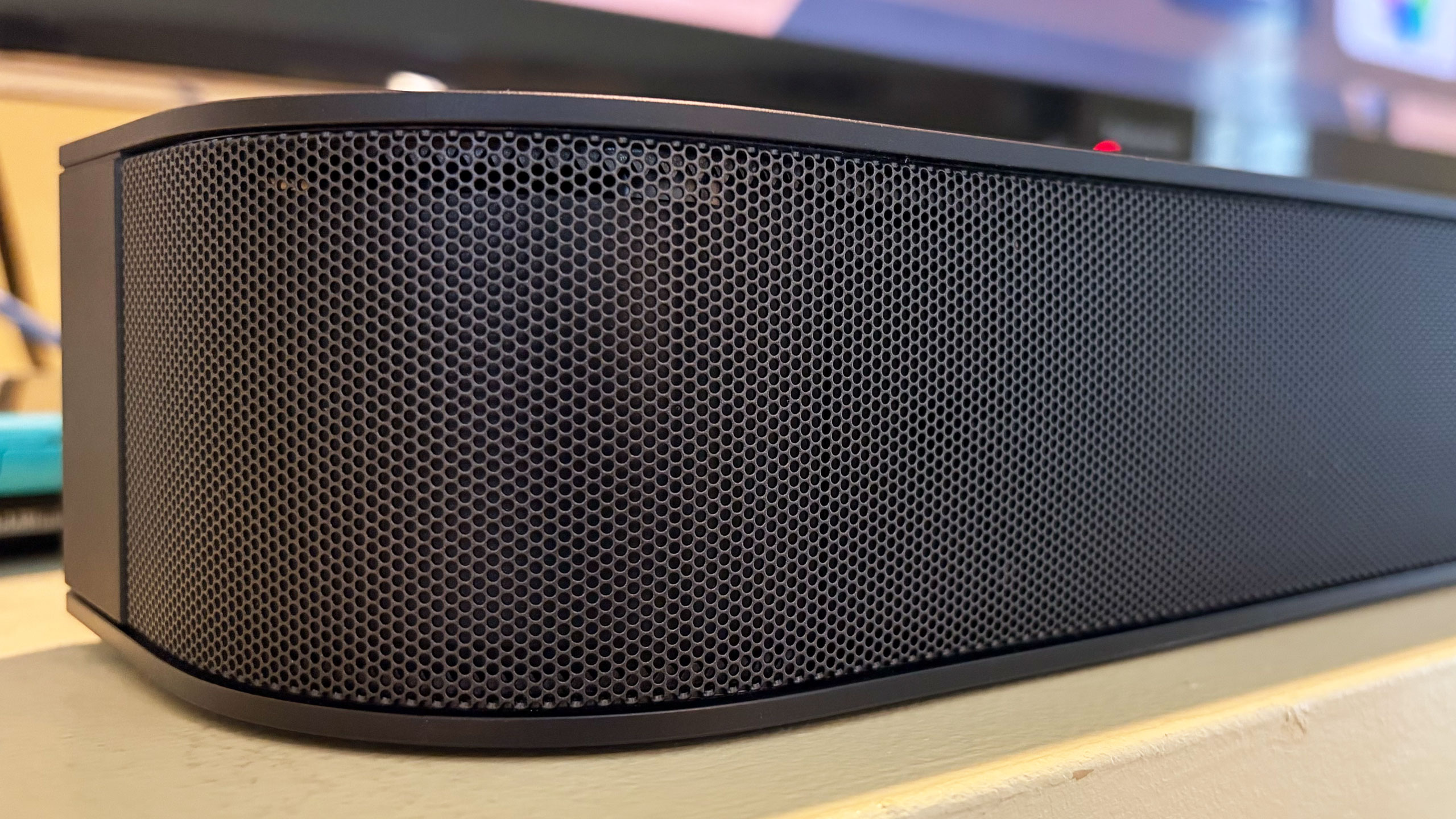
The Theater Bar 5 is the most compact soundbar among Sony’s new models, measuring just 35.5 inches wide. For comparison, that’s still about 10 inches wider than the second-gen Sonos Beam, but nearly 16 inches smaller than Sony’s flagship Theater Bar 9. This stature makes the Bar 5 well-suited for smaller spaces with smaller TVs. In fact, Sony says the soundbar will fit between the legs of Bravia TVs with multi-position stands. Plus, the Bar 5 is just over 2.5 inches tall, slightly shorter than the Beam, so it won’t block the bottom edge of most TVs. 
Despite its small size, the Bar 5 cranks out some excellent sound. There’s plenty of crisp, clear audio from the 3.1-channel configuration, and the included subwoofer provides an ample amount of booming bass. The Bar 5 supports Dolby Atmos and DTS:X, but it doesn’t have up-firing drivers. Instead, the soundbar relies on Sony’s Vertical Surround Engine and S-Force Pro Front Surround tech to virtualize much of the directional and overhead audio. More on that in a bit. 
While watching Netflix’s Drive to Survive, I experienced the excitement of F1 cars zooming around various circuits as the Bar 5 does well with general movement. The soundbar’s wide soundstage, excellent detail and booming bass provide some degree of immersion that doesn’t rely on audio projected overhead. That overall clarity and powerful bass are also great for listening to music, as the Bar 5 can handle a range of genres with ease. 

The Bravia Theater Bar 5 has a basic, compact design

Billy Steele for Engadget

From Kieran Behden & William Tyler’s acoustic/electronic 41 Longfield Street Late ‘80s to Thursday’s screamo masterpiece Full Collapse, the soundbar performs admirably. Although with heavier genres, I preferred to dial down the bass slightly. Tucker Rule’s kick drum on Full Collapse, for example, was a bit much for the standard tuning here. 
After struggling with the setup on LG’s Sound Suite, I was thankful that configuring the Bar 5 was super easy. It’s very much a plug-and-play situation, and the Bravia Connect app guides you through the initial steps. It takes about five minutes to get up and running and I’d wager even the least tech-savvy person in your life can probably figure this out. You can also opt for Night mode (less bass), Sound Field (enhanced audio) and Voice mode (louder dialogue) in the Bravia Connect app. 
All of this certainly makes the Bar 5 a solid option for someone who doesn’t need a lot of features, but stands to benefit from augmenting the sound from their TV alone. 
The not so good: Constrained Dolby Atmos and limited features 
While the Bar 5 supports Dolby Atmos and DTS:X immersive audio, Sony’s virtualization tech was a disappointment. There’s some side-to-side directional sound, but I noticed almost no simulated overhead noise. The Bar 5’s sonic clarity makes it a solid option for boosting living room audio, just don’t expect the enveloping effects that more robust (and more expensive) soundbars would offer. 
There are several features you won’t find on the Theater Bar 5, starting with the lack of onboard controls. I’m well aware that those buttons on top of soundbars don’t get used much, but if you’re like me, you still reach for them occasionally. There were several times during my testing when I tried to blindly tap the non-existent volume controls on the Bar 5. Other than a power button on the right side, your options for controlling this soundbar are a remote and the Bravia Connect app. 

The power button on the right side

Billy Steele for Engadget

You also won’t find a Wi-Fi connection on the Bar 5. This means that AirPlay and Google Cast aren’t available to easily beam audio from your devices to the soundbar. There is Bluetooth 5.3, so you do have an option for music and podcasts from your phone or laptop if you need it. However, pairing your devices to the soundbar via Bluetooth isn’t as quick as selecting the soundbar in your streaming app when AirPlay or Cast are on the spec sheet. 
Lastly, Sony doesn’t offer any type of room calibration on Theater Bar 5. Sure, a smaller soundbar like this is better in smaller spaces, but it would still be nice to have the system dial in the audio for the aspects of the room. After all, not every living room is a perfect rectangle. I can understand why the company left this feature out of a $350 model, since the tool would require extra components like microphones. This is certainly one of the more noticeable trade-offs for saving some money.  
Wrap-up
Sometimes the basics are all you need. Sony’s Bravia Theater Bar 5 provides an entry-level boost to TV audio that will be fine for people looking for just that. While there is support for immersive audio, the soundbar’s 3.1-channel setup isn’t the best for Dolby Atmos and DTS:X performance, and that’s really the biggest knock against the Bar 5. However, this model's excellent audio quality, especially the powerful bass, will suffice for customers just looking to hear their TVs better. 

The Bravia Theater Bar 5's included subwoofer

Billy Steele for Engadget

If you want a compact soundbar that provides respectable Atmos performance, the second-gen Sonos Beam is your best bet. Sure, it’s more expensive at $499 and it doesn’t come with a subwoofer, but its additional drivers, tweeter and passive radiators offer more robust audio from the soundbar alone. You also get Trueplay room calibration and Wi-Fi connectivity there. 
The Theater Bar 5 will certainly improve your living room audio compared to your TV speakers alone, but with a few more features and improved Atmos virtualization, Sony could’ve had a real winner.This article originally appeared on Engadget at https://www.engadget.com/audio/speakers/sony-bravia-theater-bar-5-review-a-basic-tv-sound-booster-140000192.html?src=rss
Razer just released some new gaming earbuds with low latency and fast switching between devices

Razer just released the Hammerhead V3 HyperSpeed gaming earbuds, another entry in the recently-crowded field of gaming earbuds. These have been designed for low latency, which is a necessity when playing video games.
To that end, the earbuds integrate with Razer's proprietary HyperSpeed 2.4GHz streaming platform, which allows for "gaming-grade lag-free" audio. This works with plenty of devices, including smartphones, tablets, PCs, the Steam Deck, the PS5 and more. The earbuds can also connect via Bluetooth for devices that don't support Wi-Fi-based streaming audio.

The charging case includes a dongle that plugs into devices via USB-C, which doubles as a wireless transmitter. Razer promises that users can quickly switch between Wi-Fi and Bluetooth audio, which would be useful when going from a PC to, say, a smartphone to listen to music.
These earbuds include improved ANC, when compared to the previous generation. The battery here lasts for 40 hours, with the earbuds getting 10 hours per charge and the case offering four charges. 
Razer
The case can charge via USB-C, which means it charges as the transmitter is being used to stream audio. However, the dongle can also work on its own without the charging case. The earbuds also support THX spatial audio on PCs.
Razer's Hammerhead V3 HyperSpeed gaming earbuds are available right now and cost $130. The almost identically-named Hammerhead V3 X HyperSpeed earbuds run $100 and connect via Bluetooth 5.3 instead of Bluetooth 6.0, with a slightly reduced battery life.This article originally appeared on Engadget at https://www.engadget.com/audio/headphones/razer-just-released-some-new-gaming-earbuds-with-low-latency-and-fast-switching-between-devices-172907717.html?src=rss

Indie game Neverway will launch this October, just in time for spooky season

Indie game studio Coldblood announced today that its debut project Neverway has been given a release window of October 2026. Billed as "nightmarish life-sim RPG," this is going right to the top of my spooky season game queue. It has a cozy-sounding premise, with protagonist Fiona starting a new life on an island, but things take a surreal turn when she becomes the immortal herald for a dead god. She'll be building relationships and making friends one minute and coping with psychological horrors the next.  This game has been on our radar since it was introduced at last year's Triple-I Initiative event. The new trailer once more shows off the work of both pixel artist Pedro Medeiros, who also worked on Celeste and Towerfall, and composer Disasterpeace, whose past game credits include Fez and Hyper Light Drifter. The prologue is available to play for free starting today on Steam, and Neverway will launch both on that PC platform as well as on the Nintendo Switch.This article originally appeared on Engadget at https://www.engadget.com/gaming/indie-game-neverway-will-launch-this-october-just-in-time-for-spooky-season-170000669.html?src=rss

1000xResist devs reveal their wild-looking second game about convincing an AI it’s not human

Developer Sunset Visitor just revealed its follow-up to the fantastic 1000xResist. It's called Prove You're Human and looks to wade in similar sci-fi waters as the team's first title.
Just like 10000xResist, the new game is a narrative adventure set in the far future. Prove You're Human tasks players with convincing an AI product that its not alive, but there's a rub. The protagonist is a digital clone of a person, so they aren't human either. This will no-doubt lead to all manner of ethical conundrums.
"An AI dares to dream she is human," a tagline reads. "You've been hired to put her in her place."

The gameplay looks to involve scanning the environment, talking to corporate employees and keeping up with the digital clone's corporeal body. There's also an emphasis on making and solving CAPTCHAs, which makes sense when trying to prove humanity or a lack thereof.
The graphics certainly look unique, as the dev team has weaved real-world footage of Vancouver and the surrounding areas into the virtual landscape. "Vancouver is a well-known film town," Remy Siu, Founder of Sunset Visitor said in a press release. "We’re accessing that infrastructure, along with our long-time collaborators, to bring a sense of tactility to human forms in the game."
We don't know when this is coming out, as the above trailer is just an announcement for the game. However, it's already available to wishlist on Steam.

This is actually a pretty big deal. 1000xResist was a bona-fide sensation and was nominated for a Hugo Award. It also managed to win a Peabody Award, which honors excellence in storytelling.This article originally appeared on Engadget at https://www.engadget.com/gaming/1000xresist-devs-reveal-their-wild-looking-second-game-about-convincing-an-ai-its-not-human-170018986.html?src=rss

Amazon’s satellite internet service is scheduled for mid-2026 availability

Amazon Leo (formerly Project Kuiper) will launch mid-2026, according to Andy Jassy. On Wednesday, the Amazon CEO dropped the news in his annual letter to shareholders. The company says Leo will support download speeds up to 1 Gbps. By comparison, Starlink’s download speeds typically range between 45 and 280 Mbps.Jassy didn't specify whether the mid-2026 launch date will include consumer availability. (An Amazon spokesperson told Engadget that the company doesn’t have more detail to add right now.) We do know that "select enterprise customers" began testing the high-speed satellite service late last year. Delta and JetBlue have already signed on to use Leo for in-flight Wi-Fi. Other businesses striking deals include AT&T, Vodafone, DirecTV Latin America and NASA.Whenever it does arrive for consumers, Amazon Leo could offer several perks compared to Starlink. It will allegedly offer six to eight times faster uplink performance and double the download speeds than competitors (read: Starlink). Amazon says it will also cost less and offer native AWS integration for enterprise data storage, analytics and AI.Despite those perks, it may be a while before Leo can deliver Musk-free satellite internet on a large scale. The service is currently behind schedule, with only 241 satellites operating in its constellation. (Starlink has over 10,000.) In January, Amazon asked the FCC for an extension on a July 2026 deadline requiring it to have 1,600 satellites in orbit. The company said at the time that it expected only around 700 to be operating by that deadline.This article originally appeared on Engadget at https://www.engadget.com/big-tech/amazons-satellite-internet-service-is-scheduled-for-mid-2026-availability-164046305.html?src=rss

Rhythm Heaven Groove comes to Switch on July 2

A large chunk of Nintendo’s 2026 plans remain a mystery (that is, unless you take the insiders and leakers at their word), but we have been waiting on release dates for a couple of previously announced first-party titles, including Rhythm Heaven Groove, which officially arrives July 2.
Seemingly announced first on the Nintendo Today! app before making its way to the company’s various social channels, the first new entry in the Rhythm Heaven series in more than a decade is technically launching on the original Switch, but should also be fully playable on Switch 2. Currently the game’s Switch 2 compatibility status is listed as “Untested” on its official store page, but it’s hard to imagine there being any issues there.
đŸ…đŸ…đŸ«‘đŸ„ŠđŸ„ŠđŸ„ŠđŸŽ”Did you catch all that? #RhythmHeavenGroove comes to #NintendoSwitch on July 2! pic.twitter.com/WrWiyC7Yqn— Nintendo of America (@NintendoAmerica) April 9, 2026

If you’ve never played a Rhythm Heaven game before, the series is a bit like a (slightly) less wacky WarioWare, but all the minigames are based around rhythm and beat-matching. The challenges are rarely especially complex in terms of what's required of you, leaving you free to enjoy the always excellent original pop and electronic music.
Rhythm Heaven is one of Nintendo’s less prolific series’, with the upcoming Groove being only the fifth entry in two decades. The series debuted on the Game Boy Advance in 2006 in Japan as Rhythm Tengoku, with Rhythm Heaven arriving on the DS two years later in the US. That was followed by Rhythm Heaven Fever on the Wii, and the most recent entry was 2015’s Rhythm Heaven Megamix for the 3DS, which was something of a best-of collection.
Rhythm Heaven Groove is notable not only for being the first Rhythm Heaven game of the Switch generation, but also likely one of the console’s last games, as Nintendo prepares to shift its full focus to the Switch 2. Before then we’re also getting the typically charming Yoshi and the Mysterious Book (Switch 2-only) on May 21 and Tomodachi Life: Living the Dream, which launches on both platforms next week, April 16. 
Rhythm Heaven Groove is available to pre-order now for $40.This article originally appeared on Engadget at https://www.engadget.com/gaming/nintendo/rhythm-heaven-groove-comes-to-switch-on-july-2-155715068.html?src=rss

OpenAI ‘pauses’ its Stargate UK data center plan

OpenAI ‘pauses’ its Stargate UK data center plan

OpenAI is putting the brakes on Stargate UK, according to Politico and Bloomberg. That’s the company’s AI infrastructure project with NVIDIA that’s meant to help the UK build out its sovereign computing capabilities. The company announced Stargate UK back in September, but it launched a strategic partnership with the UK government months before that. Stargate UK would enable the government to run top AI models locally from data centers inside the region, “particularly for specialist use cases where jurisdiction matters.” But now OpenAI is pausing the project due to high cost of energy and regulatory issues.In a statement provided to Bloomberg, the company said that it still sees a “huge potential for the UK‘s AI future.” It added that “AI compute is foundational to that goal” and that it continues “to explore Stargate UK and will move forward when the right conditions such as regulation and the cost of energy enable long-term infrastructure investment.”Upon announcing Stargate UK, OpenAI said that it would offer the same deal to other countries that want to expand their sovereign AI capabilities. It’s unclear if those plans are affected, as well, but it’s worth noting that the initiative, OpenAI for Countries, is also working with Australia, Greece, the UAE, Slovakia, Kazakhstan and other regions. This article originally appeared on Engadget at https://www.engadget.com/ai/openai-pauses-its-stargate-uk-data-center-plan-115626978.html?src=rss

Google bakes NotebookLM, its research tool, into Gemini

Google bakes NotebookLM, its research tool, into Gemini

Google has fully integrated NotebookLM, its AI-powered research tool, into the Gemini app. The company launched a standalone NotebookLM app last year, but as it said in its announcement, “keeping track of everything can be a challenge.” It added NotebookLM as a source in the Gemini app last year, but now you can create notebooks right inside the chatbot. You can now find the option to create a new notebook in Gemini’s side panel and then select “Add sources” that the tool can use, such as PDFs, documents, website URLs, YouTube videos and even copy-pasted text. NotebookLM will use information from those sources to create a searchable repository of information for you, and you can ask Gemini to create things like reviewers, infographics and video and audio overviews that turn your uploaded information into an easy-to-understand format. Take note, however, that Google warns users within the NotebookLM interface that it can be inaccurate, and that it’s best if you double-check information it puts out. The company is rolling out NotebookLM’s full integration into Gemini this week for Google AI Ultra, Pro and Plus subscribers on the web. It will be available on mobile, in more locations and to free users over the coming weeks. This article originally appeared on Engadget at https://www.engadget.com/ai/google-bakes-notebooklm-its-research-tool-into-gemini-101850634.html?src=rss

Dyson just announced its first-ever handheld fan, with a motor that spins up to 65,000 RPM

Dyson just announced its first-ever handheld fan, with a motor that spins up to 65,000 RPM

Dyson just announced its first-ever handheld fan, the HushJet Mini Cool. As the name suggests, it uses the company's proprietary HushJet air projection system. This tech first showed up on an air purifier that we found to be exceptionally quiet.
Dyson promises the fan can deliver focused airflow of up to 25m/s, which works out to 55mph. The brushless motor spins up to 65,000 RPM. This thing looks like a legitimate cooling system, despite its size. It also weighs just 7.5 ounces. 
It offers five speeds and a boost mode, which should be useful during that next heat wave. It charges via USB-C and ships with a charging stand. The fan can also stand on its own, making it a decent choice for a desk. The rechargeable battery can get up to six hours of use per charge.
Dyson
The HushJet Mini Cool costs $100, which is cheap for a Dyson product but expensive for a handheld fan. It's available in a trio of colorways. The gray model is available tomorrow. The red version goes on sale this May and the blue one will be available for purchase in June. This article originally appeared on Engadget at https://www.engadget.com/home/dyson-just-announced-its-first-ever-handheld-fan-with-a-motor-that-spins-up-to-65000-rpm-000135028.html?src=rss

✹ Join the Estate for Exclusive Access Protected by reCAPTCHA This site uses cookies for memberships, security, and site functionality Privacy Policy
Join Now
Estate Status: Offline ‱ Some live content may not update